Pakistan Resolution Day, 23 March
The Lahore Resolution, passed on March 23, 1940, and the adoption of Pakistan’s first constitution, on March 23, 1956, when the Dominion of Pakistan became the Islamic Republic of Pakistan, making Pakistan the first Islamic republic in the world, are commemorated on Pakistan National Day, also known as Pakistan Resolution Day or Republic Day.
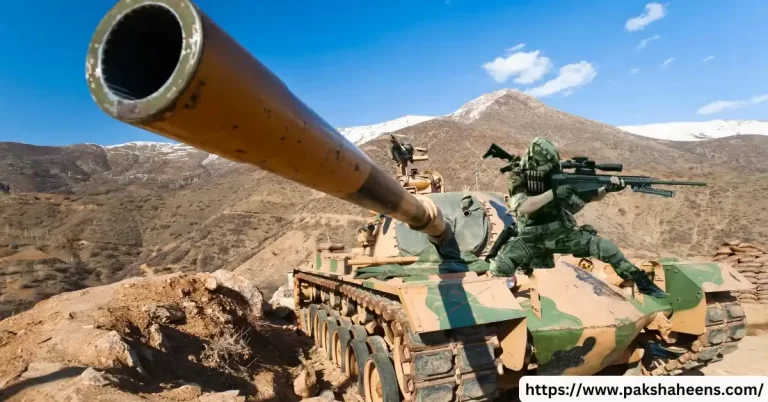
On Republic Day, the military typically marches in a parade as part of the celebrations.
The largest festivities take place in Islamabad, Pakistan’s capital. Typically, the principal guest is the president of Pakistan. Public attendees include the chairman of the Joint Chiefs of Staff, the prime minister, members of the cabinet, and the armed forces chiefs of staff.
Related: Famous Holidays in Pakistan
Objectives of Pakistan Resolution Day 1940
The resolution (Pakistan Independence Day) said that rather than fully adopting the European model, Muslim spirituality, and Pakistan’s future constitution would be based on Islamic doctrine and democratic principles.
Main Points of 23 March Pakistan Resolution Day 1940
The 23rdMarch Pakistan 1940 was a day of optimism and resolve for a large number of Muslims throughout the subcontinent.
Today marks the adoption of a resolution by Muhammad Ali Jinnah, the head of the All India Muslim League (AIML), asking for the creation of a new federation based on the British Indian provinces with a Muslim majority.

You May Like: Join Facebook Group of Shaheen Forces Academy
23 March 1940 Pakistan Resolution Day History
For Pakistanis, March 23, 1940, will forever be remembered as the day when Muslims on the subcontinent resolved to secede from British authority and form a new nation to the east and west of India. It was a historic event that altered the trajectory of Pakistani history and its people’s history.
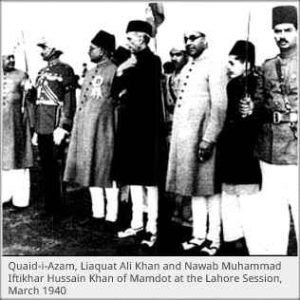
On March 23, in Minto Park, Lahore, during the annual assembly of the All India Muslim League, which was led by Quaid e Azam Muhammad Ali Jinnah, Shair Bengal Molvi Fazal ul Haq submitted the Pakistan motion. The meeting, which was attended by almost 100,000 people, unanimously approved the resolution.
Although it was referred to as the Lahore resolution, the Hindu press renamed it the Pakistan resolution, which was embraced by Muslims in India. At this AIML gathering, Muslim leaders from every Indian region were present and backed the proposal.
In her speech, Begum Muhammad Ali Johar just once mentioned Pakistan. In 1933, Chaudhry Rehmat Ali proposed the name Pakistan as a new, distinct country for Indian Muslims.
Historic Significance of Pakistan Resolution Day
The struggle for Pakistan was a difficult one from 1940 to 1947. The British government made every effort to divert Quaid-e-Azam Mohammad Ali Jinnah from his intended course, which was to visit a united India and abandon the concept of Pakistan.
Quaid-i-Azam promoted unity among the Muslim masses in the subcontinent through his enlightened policies. In March 1940, he offered the purpose of Pakistan for their approval after achieving this unity between 1935 and 1939. He was now prepared to fearlessly confront the Congress leaders with the support of the united Muslim community.
The British administration was troubled by Jinnah’s plan for Pakistan, both in India and in London. Some said Jinnah’s concept of Pakistan was a “bargaining chip” to deal with both Congress and the government of British.
Others, as previously observed, had contrary views. Yet, Jinnah’s demand for Pakistan was made with great sincerity. Because Jinnah’s political leadership had gained the support of the majority of Muslims, the British rulers were cautious about making public statements on this subject for fear of receiving backlash from the community.
23 March Pakistan Resolution Day Parade
Pakistan observes a national holiday on March 23. It honors the moment when Muslims in India chose to create a homeland apart from them. Within 7 years, Pakistan became an independent state, and Muslims in India was freed from British domination. The primary event is a large parade that takes place in Islamabad, the country’s capital.
The President, Prime Minister, and other government representatives, together with foreign dignitaries, attend this. Military weaponry is displayed throughout the parade, as the nation’s armed forces march past in a show of might. The Pakistani air force performs a flypast as well.
23 March Pakistan Resolution Day Flag Raising
Flag-raising rituals, parades, and cultural activities are held nationwide to commemorate Pakistan Day. Major festivities are conducted at the Mazar-e-Quaid in Karachi, the capital of Sindh province (the tomb of Muhammad Ali Jinnah, the country’s founding father).

Importance of Pakistan Resolution Day on 23 March
Pakistan Day has been celebrated as a national holiday since the Muslim League called for a separate homeland for Muslims in British India in the Lahore Declaration of 1940.In various sections of the nation, the day is also observed as National Day or Republic Day.
Celebrations of Pakistan Resolution Day on 23 March
Every year on March 23, people remember the Pakistan Resolution, which was passed by the Muslim League at the Lahore Conference in 1940 and called for the establishment of an independent Muslim state within the boundaries of the British Raj at the time. With parades, cultural events, and flag-hoisting ceremonies, Pakistan celebrates the occasion nationwide.
The primary events in Islamabad take place at the co-founding father of Pakistan, Mohammad Ali Iqbal’s grave when a wreath-laying ceremony is performed.
Who wrote Pakistan Resolution Day Draft?
Syed joined the Muslim League in 1938 and presented the Pakistan motion in the Sindh Assembly. Syed was a significant Sindhi activist, revolutionary, and Sufi who eventually became one of the crucial figures at the vanguard of the Sindh independence movement.
What is the second name of the Pakistan resolution Day?
The Lahore Resolution is also called (Urdu=Qarardad-e-Lahore قراردادلاھور), which is commonly known as the “Pakistan Resolution” (Urdu=قراردادپاکستانQarardad-e-Pakistan) was a political resolution or statement drafted between 22nd to 24th March 1940.
By the 25-member Working Committee of the All-India Muslim League, and then formally adopted by the Muslim League membership at its general session on 23 March 1940, held at Lahore.
Why is the Lahore Resolution called the Pakistan Resolution Day?
It is called the Pakistan resolution because the concept of a separate state for the Muslims of India called Pakistan was outlined by Mr. Jinnah publicly.
What happened in Pakistan on 23 March?
The initial version of Pakistan’s constitution went into effect on March 23, 1956, following years of discussion and revision. With this, the nation successfully made the switch from Dominion to the Islamic Republic.
See also: Best Recommended Books for Initial Tests Preparation
Who presented the Pakistan resolution on 23rd March 1940?
K. Fazlul Huq, the chief minister of undivided Bengal, proposed the resolution during the general session. Chaudhry Khaliquzzaman from the United Provinces, Zafar Ali Khan from Punjab, Sardar Aurangzeb Khan from the North-West Frontier Province, and Sir Abdullah Haroon from Sindh all seconded his motion.
Conclusion
Pakistan’s resolution was a landmark in the history of Muslims of South Asia. It determined for the Muslims a true goal and their homeland in the northeast and northwest. The acceptance of the Pakistan resolution accelerated the pace of the freedom movement.
General Knowledge MCQs with Answers
The largest museum in the world is the ______.
a. Louvre Museum, Paris
b. British Museum, London
c. American Museum of Natural History
d. Vatican Museums, Rome
Correct: c (American Museum of Natural History)
The lowest mountain range in the world is the ______.
a. Andes
b. Himalayas
c. Buena Bhalle
d. Alps
Correct: c (Buena Bhalle)
The country known as the Land of Cakes is ______.
a. France
b. Scotland
c. Switzerland
d. Italy
Correct: b (Scotland)
The place known as the Garden of England is ______.
a. Kent
b. Cornwall
c. Yorkshire
d. Sussex
Correct: a (Kent)
The tallest tower in the world is the ______.
a. Eiffel Tower, Paris
b. Burj Khalifa, Dubai
c. C. N. Tower, Toronto, Canada
d. Tokyo Skytree, Japan
Correct: c (C. N. Tower, Toronto, Canada)
The country famous for its fish catch is ______.
a. Norway
b. Japan
c. Canada
d. Iceland
Correct: b (Japan)
The old name of Taiwan was ______.
a. Macau
b. Formosa
c. Hong Kong
d. Canton
Correct: b (Formosa)
Montreal is situated on the bank of River ______.
a. St. Lawrence
b. Ottawa
c. Mississippi
d. Hudson
Correct: b (Ottawa)
The city of Bonn is situated in ______.
a. France
b. Germany
c. Austria
d. Belgium
Correct: b (Germany)
The literal meaning of Renaissance is ______.
a. Rebirth
b. Revival
c. Enlightenment
d. Revolution
Correct: b (Revival)
Julius Caesar was killed by ______.
a. Nero
b. Brutus
c. Augustus
d. Cassius
Correct: b (Brutus)
The title of Desert Fox was given to ______.
a. Erwin Rommel
b. Douglas MacArthur
c. George Patton
d. Bernard Montgomery
Correct: a (Erwin Rommel)
The largest airport in the world is the ______.
a. Hartsfield-Jackson, USA
b. King Khalid International Airport, Saudi Arabia
c. Beijing Capital International Airport, China
d. Dubai International Airport, UAE
Correct: b (King Khalid International Airport, Saudi Arabia)
The city in Russia which faced an earthquake in 1988 was ______.
a. Armenia
b. Yerevan
c. Tbilisi
d. Baku
Correct: a (Armenia)
The largest bay in the world is ______.
a. Bay of Bengal
b. Hudson Bay, Canada
c. Gulf of Mexico
d. Chesapeake Bay
Correct: b (Hudson Bay, Canada)
The largest church in the world is ______.
a. St. Paul’s Cathedral, London
b. Basilica of St. Peter, Vatican City, Rome
c. Notre-Dame, Paris
d. Sagrada Familia, Barcelona
Correct: b (Basilica of St. Peter, Vatican City, Rome)
The largest peninsula in the world is ______.
a. Iberian Peninsula
b. Arabian Peninsula
c. Indian Peninsula
d. Scandinavian Peninsula
Correct: b (Arabian Peninsula)
The largest gulf in the world is the ______.
a. Gulf of Mexico
b. Persian Gulf
c. Gulf of Aden
d. Gulf of Guinea
Correct: a (Gulf of Mexico)
The tallest statue in the world is the ______.
a. Statue of Liberty, USA
b. Motherland, Volgograd, Russia
c. Christ the Redeemer, Brazil
d. Spring Temple Buddha, China
Correct: b (Motherland, Volgograd, Russia)
The largest railway tunnel in the world is the ______.
a. Gotthard Base Tunnel, Switzerland
b. Channel Tunnel, UK-France
c. Oshimizu Tunnel, Japan
d. Seikan Tunnel, Japan
Correct: c (Oshimizu Tunnel, Japan)